

A few weeks ago, I attended the American Urological Association annual meeting in Washington, D.C.
If you happened to develop a kidney stone or find yourself unable to urinate, there was a decent chance your local urologist was in Washington, D.C. attending the American Urological Association annual meeting alongside thousands of colleagues from around the country.
I’ve always enjoyed these meetings. Part of that is the opportunity to reconnect with people I don’t see very often. Medicine is a surprisingly small world, and after enough years you start looking forward to the chance encounters almost as much as the educational sessions themselves. But these conferences also serve as a useful reminder that there are still countless people pushing the field forward. New research, new technology and new ways of thinking about old problems all tend to gather in the same place for a few days. Honestly, it can be a little overwhelming.
But annual meetings are also places to make new connections and see old friends.
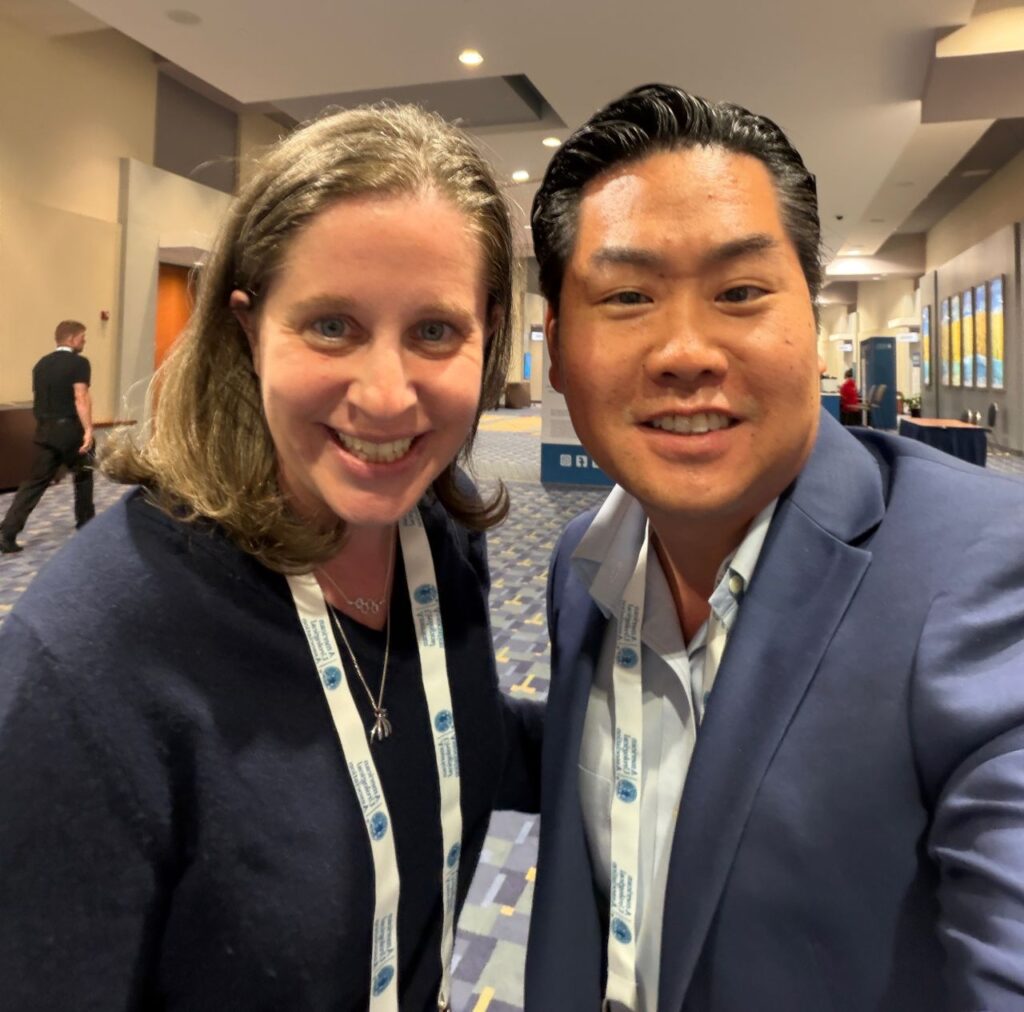
One of the more memorable encounters I had during the conference was with Rachel Rubin, MD. For those unfamiliar with her work, Dr. Rubin has become one of the leading voices in sexual medicine and women’s health. She was part of the congressional hearing that got the black box warning removed from vaginal estrogen cream. This intervention alone will probably lead to thousands of less deaths from UTI-related sepsis over the next decade.
After our meeting, I found myself thinking a lot about the scale of her impact.
Most physicians spend their careers helping patients one at a time. That’s meaningful work, and it’s the foundation of everything we do. Occasionally, though, you meet someone whose influence extends much further than the walls of a clinic or operating room. Someone who identifies a problem that has quietly affected patients for years and decides it’s worth challenging the assumptions surrounding it.
In Dr. Rubin’s case, her advocacy around female hormone replacement therapy has the potential to directly improve the lives of roughly half of our world’s population. That’s massive. It’s also notable because it’s helping to reverse long-held orthodox beliefs about hormone therapy that has been frankly wrong for the last 20+ years.
Progress often begins when someone pays attention to a problem that others have accepted as normal.
That idea stayed with me after the conference because it connects to something I’ve been thinking about quite a bit lately.
Attention is a surprisingly powerful force.
Much of who we become professionally (and personally) is shaped by what we are taught to notice.
The Lens We Carry Home
Medical training is an education in the focus of attention.
By the time a physician finishes residency, thousands of hours have been spent learning how to identify patterns that other people overlook. We learn to tune out the noise and focus on abnormalities and subtle clues that might point toward an underlying pathology. Over time, that process becomes remarkably efficient. A patient can walk into the room and within minutes we’re already sorting information, filtering possibilities, and deciding which details deserve further investigation.
It’s a skill that saves lives. It’s also a skill that bleeds over into our personal lives (perhaps to our detriment).
After enough years, the habit of scanning for problems becomes part of the way you move through the world. Physicians spend so much time identifying what requires attention that we can begin viewing everything through that same lens. We become highly attuned to urgency. We notice what needs fixing. We focus on the next responsibility, the next obligation, the next thing demanding action.
In medicine, that’s often exactly the right approach. Outside of medicine, I’ve started to wonder what it causes us to miss.
A thought like that probably would have felt abstract and unimportant to me years ago. These days, I get reminded of it regularly by my kids.
What Gets Left Behind
One of the small surprises of parenthood is realizing how differently children experience the world.
My boys can become completely absorbed by things that barely register in my awareness. A strangely shaped rock. A stick that looks like a sword. A snakeskin along the edge of a trail. Objects that, to me, seem like part of the scenery suddenly become the most important thing in the world.
The funny part is that they aren’t necessarily noticing more than I am. They’re just noticing it all differently.

When we’re walking somewhere, my attention naturally drifts toward where we’re headed next. How much time we have, what needs to happen afterward and whether I’m forgetting something. Their attention remains anchored to whatever happens to be directly in front of them.
Neither approach is inherently better. One helps you navigate responsibility. The other helps you experience the moment you’re already in.
As I’ve spent more time thinking about that distinction, I’ve started seeing versions of it everywhere else. Including with investing capital.
What Draws Our Attention
When people first become interested in investing, attention naturally gravitates toward the most visible part of the equation: returns. How much could an investment make? What does the upside look like? Which opportunity appears most attractive on paper?
That’s a perfectly reasonable place to start. It’s where most of us start.
Early in my own investing journey, I spent a lot of time looking at the same things. Projected returns, appreciation potential, cash flow projections, market growth. Those metrics mattered because they were tangible. They gave me something to compare and helped create the feeling that investing could be reduced to a series of calculations. Experience tends to complicate that view though.
The investments that look best on paper don’t always perform the best. The opportunities with the most exciting projections sometimes depend on a long list of assumptions going exactly right. Meanwhile, some of the investments that appear almost boring at first glance end up proving remarkably resilient over long periods of time.
After a while, different questions start competing for your attention.
- What assumptions are being made?
- What has to happen for this investment to work?
- What happens if those assumptions prove wrong?
- Who is making the decisions?
- How are incentives aligned?
Those questions rarely generate the same excitement as projected returns, but they often reveal far more about the quality of an investment.
Looking back, I think this progression mirrors what happens to many investors as they gain experience. The beginning is often about opportunity. Learning the language, understanding the possibilities and discovering what investing can make possible. Eventually, attention expands beyond the opportunity itself and toward the structure supporting it.
The underlying business, the people involved, the incentives, the sources of risk and the margin for error. At some point, investing becomes less about finding the highest potential return and more about understanding what could threaten the outcome in the first place.
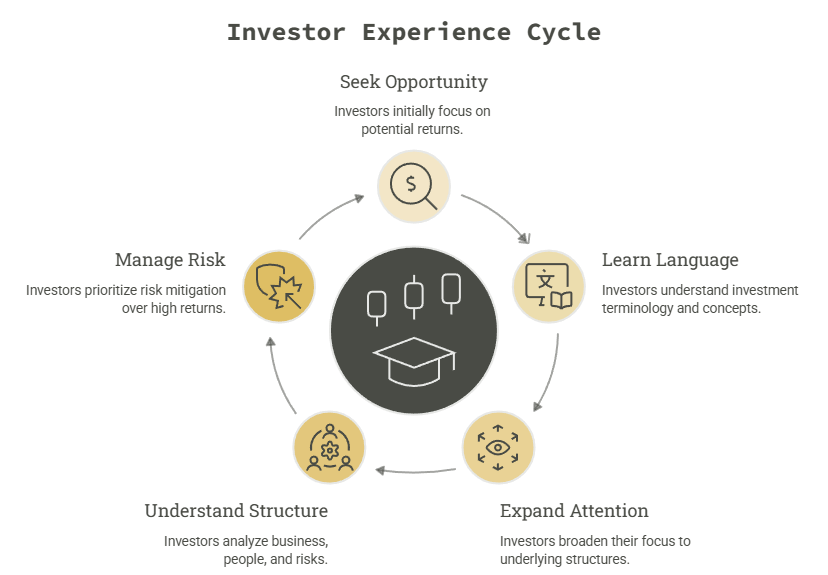
That perspective has influenced my investing decisions far more than any individual market cycle. The opportunities I find most compelling today are rarely the ones with the most exciting projections. They’re the ones where the assumptions feel reasonable, the incentives are aligned, and the downside appears manageable even when things don’t unfold exactly as planned.
In many ways, it’s the same skill medicine teaches us every day. The obvious answer is often less important than the details sitting quietly underneath it.

Want to support the blog?
- Join our investor club at Cereus Real Estate
- Visit my Recommendations page
- Check out my wife’s food blog: Eat Dessert First
- Check out my TikTok channel
- Follow me on Instagram
- Follow me on YouTube
- Contact me with questions
Experience the financial benefits of real estate without dealing with the headache!