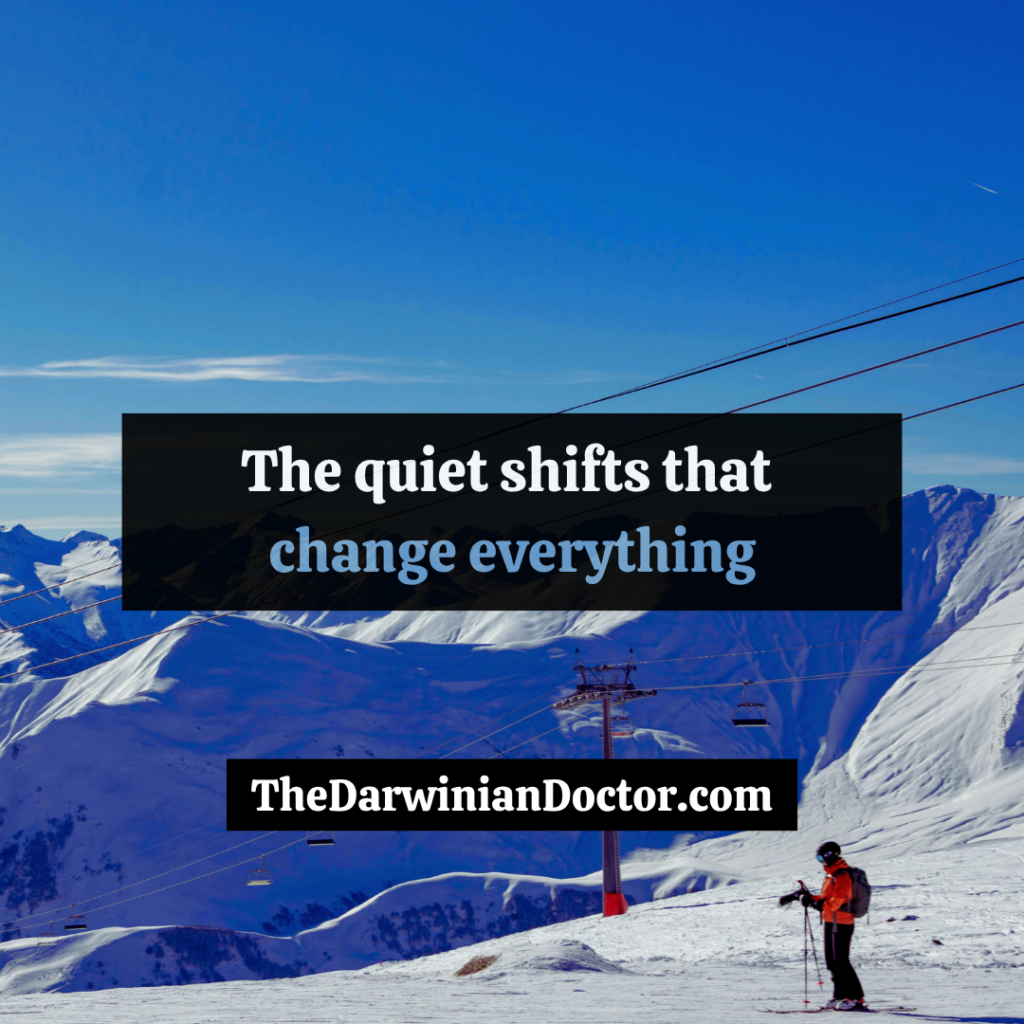
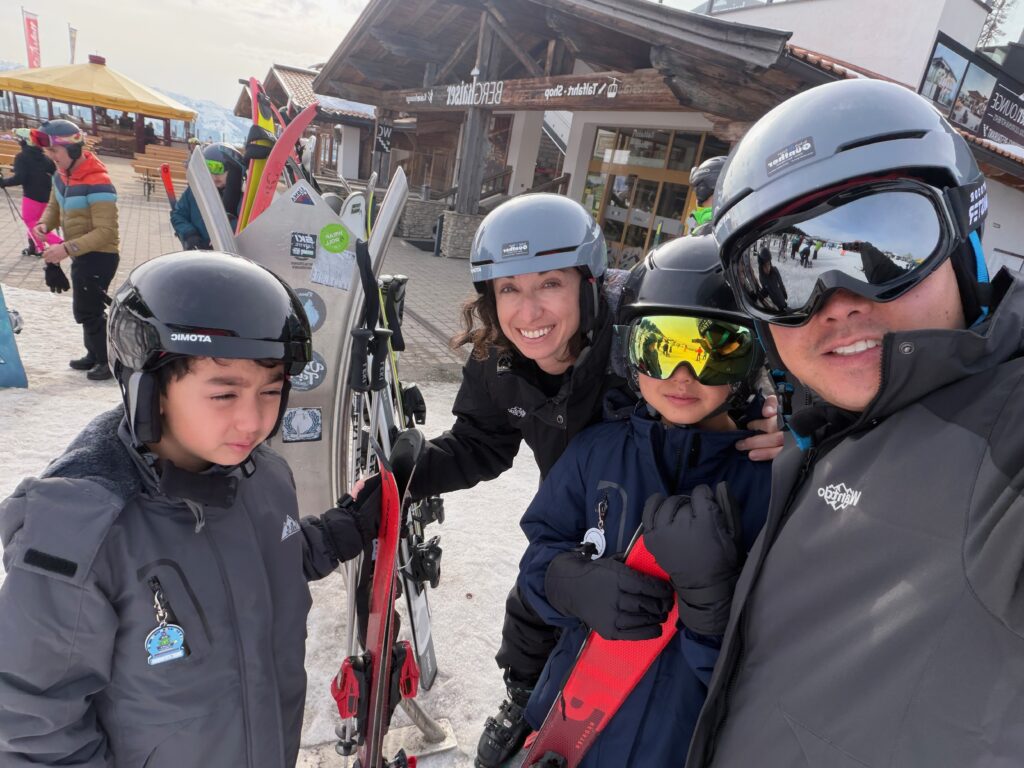
During a recent ski trip in Austria with my family, I had a moment that stayed with me afterward longer than I expected.
At some point during the day, I realized I hadn’t thought about work in hours. Not casually, not subconsciously, not in the background the way I normally would. I wasn’t mentally organizing the upcoming week or thinking through surgeries or clinic schedules while riding the lift.
I was just skiing with my kids.
That probably sounds simple, but for most of my career, that kind of mental quietness was actually pretty rare.
Even during vacations, part of my mind usually stayed connected to work. Medicine trains you to think that way. There is always something waiting for your attention, and after enough years, constantly thinking ahead starts to feel normal. You stop noticing how difficult it becomes to fully settle into the moment you’re actually in.
What struck me afterward wasn’t really the trip itself. It was realizing how different my relationship with work feels now compared to earlier in my career.
The Momentum You Stop Questioning
Years ago, my schedule mostly evolved through momentum. Opportunities came up, and I said yes to almost all of them. That mindset is deeply ingrained in medicine. During training and early attending years especially, there’s a constant pressure to keep moving forward, keep building, keep proving yourself. A busy schedule becomes reassuring because it feels like evidence that things are going well.
And to be fair, that mentality served me well in many ways. It helped me build a career I’m incredibly grateful for. But over time, I also started realizing how easy it is to build a life where work occupies not only your time, but your mental space too. Even when you’re technically away from it.
Medicine carries a unique kind of psychological weight because responsibility rarely ends when the workday ends. Even when things are stable, part of your brain often remains engaged somewhere in the background. You’re thinking ahead to future clinic days, upcoming surgeries, patient messages, staffing issues, scheduling conflicts. It becomes such a constant state that eventually you stop recognizing it as mental strain at all.
You just assume this is what adulthood and professionalism feel like. And I think that’s part of why moments of genuine quietness can feel strangely unfamiliar after enough years. Not because something dramatic changes, but because you suddenly notice the absence of noise you had been carrying for so long.

I think my wife noticed this before I did.
Over the years, she would occasionally ask questions about my schedule or whether certain commitments were actually worth the energy they required. Nothing dramatic, just small observations that gradually made me reflect more honestly on what I wanted life to look like long term. And not just professionally, but personally too.
At the time, I mostly viewed those conversations practically. I thought about efficiency or time management, maybe rearranging certain responsibilities, delegating more effectively and creating a better schedule.
But looking back, I think she was noticing something deeper.
There’s a difference between managing your responsibilities successfully and actually feeling present inside your own life.
For a long time, I was very good at the first category.
Like many physicians, I had spent years optimizing for productivity almost automatically and medicine rewards that mentality aggressively. The people who work hardest, stay busiest, and say yes most often are frequently the ones who advance fastest professionally.
So you learn to associate constant motion with progress and you also learn to associate rest with falling behind.
None of this felt unhealthy to me at the time because it was normal. Everyone around me was functioning similarly. We all carried packed schedules. We all talked about burnout while simultaneously continuing to add more commitments to our lives.
And again, I don’t say any of this critically. Ambition helped build many of the things I value most in my life. I still care deeply about medicine, business, and creating meaningful work. But eventually I started asking a different question underneath all of it:
What kind of life was all this effort actually creating?
Income, Freedom, and the Difference Between Them
That reflection ended up changing the way I thought about financial independence.
Earlier in my career, I assumed that earning more would naturally create more freedom. And in some ways, that’s true. Medicine gave me opportunities and stability that I never take for granted.
But eventually I realized there’s a difference between earning a high income and having genuine control over your time.
You can be financially successful while still feeling psychologically tethered to work almost constantly. You can have a high income while still lacking flexibility over your schedule, your energy and your attention.
That distinction became much clearer to me once I started building income streams outside of clinical medicine.
Initially, my interest in real estate investing was mostly intellectual. I enjoyed learning about business structures, leverage, tax strategy, and long-term wealth building. It engaged a different part of my brain than medicine did. But over time, I realized the deeper impact had less to do with the numbers themselves.
Real estate investing and business ownership didn’t suddenly transform my life overnight, but they slowly changed the structure underneath it. Decisions became less reactive and I found myself thinking more carefully about where my energy was going instead of automatically saying yes simply because an opportunity existed.
That shift happened gradually enough that I probably didn’t fully appreciate it while it was occurring. But psychologically, it changed a lot.
The biggest difference wasn’t necessarily financial. It was the growing sense of optionality. The ability to step back and ask whether I actually wanted to do something instead of assuming I had to.

Learning to Be More Present
What surprised me most was how much this affected my personal life, not just my professional one.
I became more present.
Not perfectly, obviously. I still have busy weeks and periods where work consumes more attention than I’d like. But there’s a noticeable difference now in how often I’m able to fully engage with the people around me without mentally drifting somewhere else.
That was the feeling I noticed in Austria.
Not freedom in some dramatic sense. Just the ability to spend an entire afternoon with my family without part of my brain already moving ahead to the next obligation. The older I get, the more I appreciate those moments.
I also think they’re easy to underestimate earlier in life because ambition naturally focuses your attention on bigger milestones. Career progression. Income growth. Professional recognition. You spend years believing those things will eventually create the feeling you’re looking for. And sometimes they do, temporarily. But some of the best parts of life end up being much quieter than that.
Long dinners that unexpectedly stretch late into the evening. Conversations during travel days. Sitting with family after a full day doing absolutely nothing productive. Moments that don’t look particularly important while they’re happening, but somehow become the memories that stay with you most clearly later.
I think younger versions of ourselves often imagine meaningful life changes arriving dramatically. Some major breakthrough. Some obvious before-and-after moment where everything suddenly feels balanced and peaceful.
At least for me, life hasn’t really worked that way.
The Gradual Nature of Meaningful Change
Looking back, none of the changes that led me here happened dramatically.
There wasn’t one major turning point where life suddenly became balanced or peaceful. Most of it came through small decisions repeated consistently over time. Learning about investing. Building additional income streams slowly. Becoming more intentional about commitments. Protecting time a little more carefully each year.
Individually, those decisions didn’t feel especially significant.
Together, they changed the texture of daily life in a way I probably couldn’t fully appreciate at the beginning.
And honestly, I think that’s one of the most meaningful aspects of passive income that people don’t talk about enough. The financial side matters, of course, but the deeper impact is often psychological. It changes the way you experience your days. It gives you a little more room to breathe, think, and actually be present in your own life.
I still care deeply about medicine and business and building meaningful things. That hasn’t changed. But I think I value optionality much more now than constant growth for its own sake.
Having the ability to structure life more intentionally becomes increasingly valuable over time.
That perspective is part of what eventually led us to build Cereus Real Estate as well. Not simply as an investment company, but as a vehicle that helps create more long-term flexibility for busy professionals who are trying to build thoughtful lives outside the constant momentum of their careers.
For me, though, the realization itself arrived quietly, somewhere on a ski mountain in Austria. And in hindsight, those quieter realizations are usually the ones that matter most.

Want to support the blog?
- Join our investor club at Cereus Real Estate
- Visit my Recommendations page
- Check out my wife’s food blog: Eat Dessert First
- Check out my TikTok channel
- Follow me on Instagram
- Follow me on YouTube
- Contact me with questions
Experience the financial benefits of real estate without dealing with the headache!