
Most doctors excel at following a structured path—but without clear goals, it’s easy to drift through your career without intentionally building the life you truly want.

For most of your life, the next step was always clear.
First, get into medical school. Then, survive residency. Finally, step into the world of attending life, where the long hours and hard work finally start paying off. But once you reach that point, an unexpected challenge arises: What comes next?
For years, there was no need to set personal goals because the system did it for you. But once you finish training, that structure disappears, and suddenly, you are the one responsible for defining your future.
This is what happened to me. It’s why two years into my attending career, I looked up and realized I had no big goals to focus my energy and drive. That’s when I realized the weight of my golden handcuffs and got on the path to financial freedom.
Now just a short while later, I have a rapidly growing portfolio of real estate and split my time intentionally between Cereus Real Estate and my medical career.
Goal Setting is Essential
This is where goal setting becomes an essential skill. Without it, physicians can find themselves on autopilot—working long hours, earning well, but never building a life that aligns with their true aspirations. The good news? Goal setting is a skill, and like any skill, it can be learned and improved.
Why Goal Setting Matters
There is compelling research on the power of goal setting. Studies show that people who set goals are 40% more likely to succeed than those who don’t.
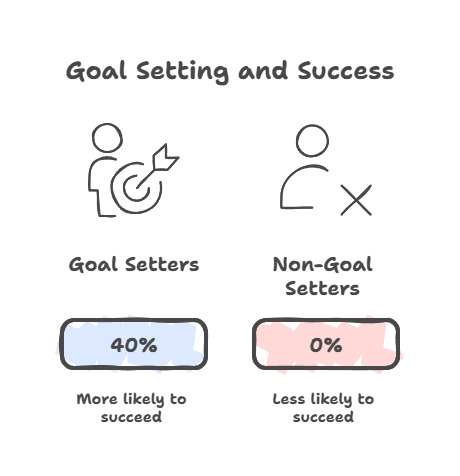
Yet, many physicians never develop this skill because they’ve never needed to. The medical training system has built-in goals—providing a clear series of steps to follow. But once training ends, physicians must learn to define their own goals, both professionally and personally.
Without intentional goal setting, it’s easy to fall into a pattern of reactive decision-making—accepting new responsibilities, working harder, and increasing income without a clear long-term strategy. Over time, this can lead to burnout, dissatisfaction, or a career that lacks flexibility and fulfillment.
Step 1: Visualize Your Ideal Future
The first step in setting meaningful goals is to clarify what success looks like. This requires more than vague aspirations like “achieving work-life balance” or “saving for retirement.” It means constructing a detailed vision of your ideal future.
For me, this exercise began during my daily two-hour commute as a full-time surgeon in Los Angeles. Sitting in traffic, I started thinking about what I truly wanted my life to look like in 10 to 15 years. I imagined a life where I had control over my time, worked only when I wanted to, and had built a financial foundation that allowed for freedom and flexibility.
Here’s how you can do this for yourself:
- Find a quiet moment—perhaps during a morning walk or while commuting.
- Picture your ideal day—where do you live? How many hours are you working? What are you doing with your free time?
- Be specific—the more details you can include, the clearer your goals will become.
By creating a vivid picture of your ideal future, you create a framework for the goals that will help you get there.
Step 2: Define Your “Why”
Once you have a vision, the next step is identifying the deeper motivation behind it. Goals without truly meaningful purpose are often waylaid as obstacles arise and motivation fades.
To uncover your “why,” ask yourself a simple question: Why does this goal matter to me? Then, ask again. And again. Each time, you peel back another layer, getting closer to the core reason behind your ambitions.
For example, my goal was financial freedom. But why? Initially, I thought it was about flexibility. But after several rounds of self-questioning, I realized it went deeper. Growing up, my family faced financial instability, and my father’s work schedule meant he wasn’t around much. I wanted a different experience for my own children—one where financial security allowed me to be present for them.
This realization gave my goal a sense of urgency and purpose. It was no longer just about numbers in a bank account; it was about family, stability, and creating a better future.
Your “why” will serve as a source of resilience when challenges arise. If your goals are only about financial gain or external validation, it will be harder to stay committed when the inevitable roadblocks appear.
Step 3: Make Your Goals SMART
A common mistake in goal setting is keeping things too vague. Saying “I want to be financially free” or “I want to be healthier” lacks clarity. The solution is to use the SMART goal framework, ensuring each goal is:
- Specific – Instead of “I want financial freedom,” define it: “I want to generate $10,000 per month in passive income within 10 years.”
- Measurable – Track progress with milestones. Are you increasing your investment income each year? Are you paying down debt at a defined rate?
- Achievable – Goals should push you beyond your comfort zone but remain realistic based on effort and strategy.
- Relevant – Goals should align with your vision and deeper purpose.
- Time-bound – A goal without a deadline is just a dream. Set a timeframe for achievement.
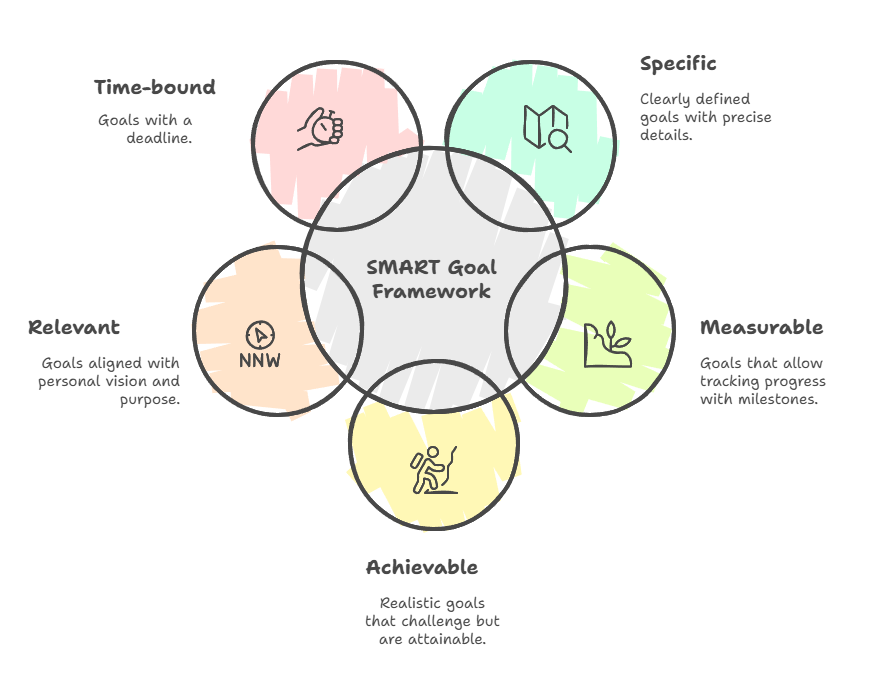
Applying this framework to my own goals helped me move from vague aspirations to actionable steps.
Step 4: Prioritize Progress Over Perfection
Physicians are trained to pursue perfection. In medicine, small mistakes can have serious consequences, making precision a critical skill. But outside of patient care, perfectionism often leads to paralysis.
Many physicians hesitate to start a new investment, business venture, or side project because they feel they aren’t fully prepared. They want to read one more book, take another course, or analyze the market a little longer. The result? No action.
But progress—even if imperfect—is more valuable than waiting for the perfect moment. Over time, consistent action, even at 80% effectiveness, leads to far greater success than never taking the first step.
This was a lesson I had to learn myself. When I launched Cereus Real Estate, I didn’t have all the answers. But I started anyway, learning and adapting as I went. Now, we have over 450 investors and have raised more than $1.2 million for real estate investments. None of that would have happened if I had waited for the “perfect” plan.
Step 5: Engage Your Senses (The Science of Success)
Goal setting isn’t just about writing things down—it’s about making them real in your mind. Studies show that people who vividly picture their goals are 20-40% more likely to achieve them.
To engage your senses:
- Write down your goals and keep them somewhere visible.
- Picture success in detail by imagining where you’ll be or what your days will look like.
- Engage your senses—whether it’s music, a scent, or a specific place, use environmental cues to reinforce your vision.
The clearer the goal, the more your brain will work to bridge the gap between where you are now and where you want to be.
Final Thoughts: It’s Time to Take Control
For most of your medical career, your path was defined for you. But now, the responsibility falls on you to shape your future. That’s why goal setting is essential.
Take 10 minutes this week to:
- Visualize your ideal future.
- Define your why.
- Write down one SMART goal.
- Take action—progress over perfection.

And remember: Financial freedom isn’t a dream—it’s a decision.
Let’s get there together.

P.S. Ready to Start Your Passive Income Journey?
If real estate investing is part of your financial freedom plan, Cereus Real Estate can help. We provide passive investment opportunities for high-income professionals. Let’s build wealth together.
Experience the financial benefits of real estate without dealing with the headache!

Want to support the blog?
- Join our investor club at Cereus Real Estate
- Visit my Recommendations page
- Check out my wife’s food blog: Eat Dessert First
- Check out my TikTok channel
- Follow me on Instagram
- Follow me on YouTube
- Contact me with questions